Inioluwa Deborah Raji (born 1995/1996) is a Nigerian-Canadian computer scientist and socio-tech leader who works on algorithmic bias, AI accountability, and algorithmic auditing. A current Mozilla fellow, she has been recognized by MIT Technology Review and Forbes as one of the world's top young innovators. Raji started her work with racial bias in technology during her internship with Clarifai when she recognized that people of color were more often tagged for NSFW compared to white people. Raji has previously worked with Joy Buolamwini, Timnit Gebru, and the Algorithmic Justice League on researching gender and racial bias in facial recognition technology. Her work on racial bias in facial recognition has forced companies to ultimately change their practices. She has also worked with Google’s Ethical AI team and been a research fellow at the Partnership on AI and AI Now Institute at New York University working on how to operationalize ethical considerations in machine learning engineering practice. She was working on a computer vision model that would help clients flag inappropriate images as NSFW. == Early life and education == Raji was born in Port Harcourt, Nigeria, and moved to Mississauga, Ontario, Canada, when she was four years old. Eventually her family moved to Ottawa. She attended Colonel By Secondary School and completed the International Baccalaureate programme. She studied Engineering Science at the University of Toronto, graduating in 2019. In 2015, she founded Project Include, a nonprofit providing increased student access to engineering education, mentorship, and resources in low income and immigrant communities in the Greater Toronto Area. She started a Doctor of Philosophy - PhD, in Computer Science from the University of California, Berkeley in Aug 2021. == Career and research == Raji worked with Joy Buolamwini at the MIT Media Lab and Algorithmic Justice League, where she audited commercial facial recognition technologies from Microsoft, Amazon, IBM, Face++, and Kairos. They found that these technologies were significantly less accurate for darker-skinned women than for white men. With support from other top AI researchers and increased public pressure and campaigning, their work led IBM and Amazon to agree to support facial recognition regulation and later halt the sale of their product to police for at least a year. Raji also interned at machine learning startup Clarifai, where she worked on a computer vision model for flagging images. She participated in a research mentorship program at Google and worked with their Ethical AI team on creating model cards, a documentation framework for more transparent machine learning model reporting. She also co-led the development of internal auditing practices at Google. Her contributions at Google were separately presented and published at the AAAI conference and ACM Conference on Fairness, Accountability, and Transparency. In 2019, Raji was a summer research fellow at The Partnership on AI working on setting industry machine learning transparency standards and benchmarking norms. Raji was a Tech Fellow at the AI Now Institute worked on algorithmic and AI auditing. Currently, she is a fellow at the Mozilla Foundation researching algorithmic auditing and evaluation. Raji's work on bias in facial recognition systems has been highlighted in the 2020 documentary Coded Bias directed by Shalini Kantayya. She also took part in the 2026 documentary The AI Doc: Or How I Became an Apocaloptimist directed by Daniel Roher. == Awards == 2019 Venture Beat AI Innovations Award in category AI for Good (received with Joy Buolamwini and Timnit Gebru) 2020 MIT Technology Review 35 Under 35 Innovator Award 2020 EFF Pioneer Award (received with Buolamwini and Gebru) 2021 Forbes 30 Under 30 Award in Enterprise Technology 2021 100 Brilliant Women in AI Ethics Hall of Fame Honoree 2023 Time magazine 100 Most Influential People in AI
KE Software
KE Software is a formerly Australian-owned computer software company based in Manchester, United Kingdom, which specialises in collection management programs for museums, galleries and archives. The Axiell Group acquired the firm in 2014. == History == KE Software had its origins in investigations into electronic systems for managing natural science collections conducted in the late 1970s under a joint program of the University of Melbourne, the then National Museum of Victoria and the Australian Museum, which led to the development of the Titan Database in 1984. Much of the credit for the development of the project was due to the work of Martin Hallett of the Museum of Victoria which evolved into Textpress, and by 2000, the KE EMu database program. KE Software was bought by Axiell in 2014 and the team merged with the Axiell staff. Axiell continues to sell and support EMu. == Products == The firm has two main products: the Ke EMu Electronic Museum management system, a collections management system for museums; and Vitalware Vital Records Management System. The first version of Ke EMu was launched in 1997 and uses the Texpress database engine with client/server architecture on a Windows or Unix/Linux server. Ke Emu is consistent with the Dublin Core / Darwin Core standards for archive and museum catalogue metadata. "The company’s clients include the three largest museums in the world.: == KE EMu == KE EMu is considered one of the more effective and purpose-designed museum cataloguing programs. particularly in the creation of public interfaces to museum catalogue data. KE EMu was further developed in 1997 as a multilingual platform, which has been utilised in bilingual institutions such as the Canadian Museum of Civilisation. Subsequently this evolved into Texpress and KE EMu (standing for Electronic MUseum) in 2000, which is "now used across the world in natural science museums with huge collections'". KE EMu is used by a large number of museums and galleries around the world, including the Smithsonian Anthropological Collection, American Museum of Natural HistoryVancouver Art Gallery, New York Botanical Garden, the University of Chicago Research Archives, the University of Pennsylvania Museum in Philadelphia, the National Museum of Australia, the Australian Museum, Museum of Victoria, University of Melbourne Archives, and the Alexander Turnbull Library, National Library of New Zealand. There are over 300 clients, and more than 5000 users of the EMu software worldwide. The program has been described as providing "...comprehensive museum management (collection management plus other administrative needs for a museum), workflow and project management, flexible metadata, various stats and metrics, and comprehensive web interface with support for mobile devices and kiosks" == KE Vitalware == The firm's vitalware software is used by a number of governments and commercial organisations for managing and accessing large data sets, such as the birth records of the Trinidad and Tobago Registrar General, the Government of Anguilla, Ministry for Infrastructure, Communications, Utility and Housing, and the Mississippi Department of Information Technology Services. == Further development == A specialist tracking component for KE EMu has been developed by Forbes Hawkins of Museum Victoria. This enables locations to be barcoded, and data to be updated as items are moved around the stores, or between venues, display, laboratories and other locations. This system has been considered by Museums around the world. The company has been working with Australian government agencies to digitize birth deaths and marriage registers in order to cross match identity data. The program has also been used for managing the Australian Plant Disease Database and the Australian Plant Pest Database as the program "...has several features that have proven to be invaluable for a plant disease database".
Terminator (franchise)
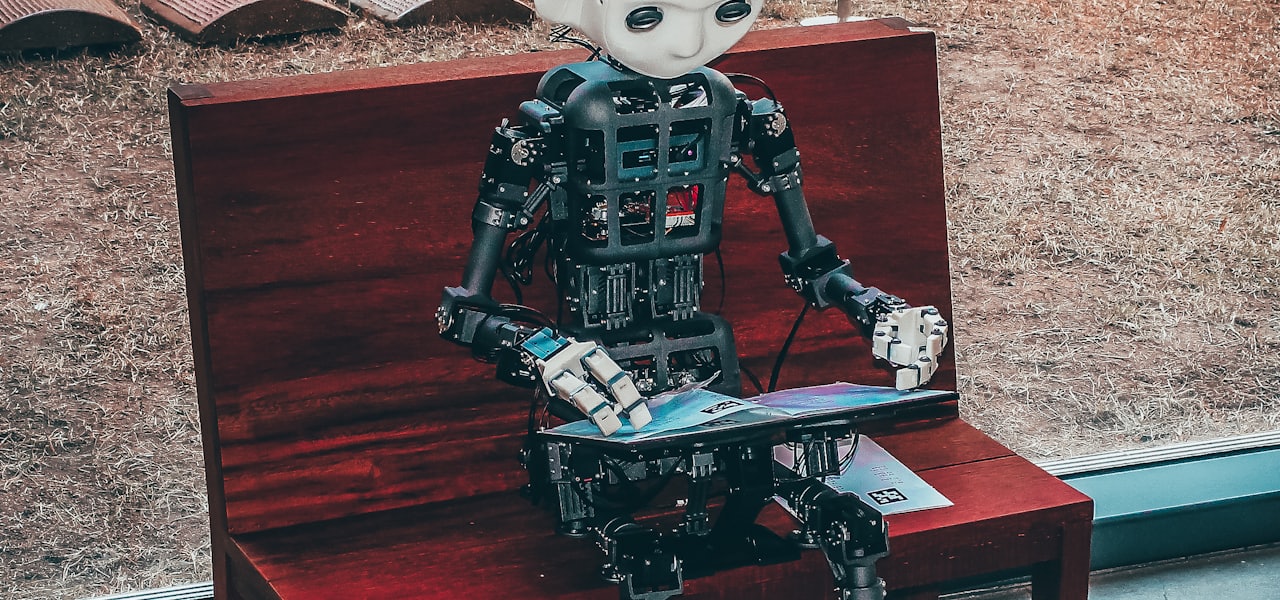
Terminator is an American media franchise created by James Cameron and Gale Anne Hurd. It is considered to be of the cyberpunk subgenre of science fiction. The franchise primarily focuses on the events leading to a future post-apocalyptic war between a synthetic intelligence known as Skynet, and a surviving resistance of humans led by John Connor. In this future, Skynet uses an arsenal of cyborgs known as Terminators, designed to mimic humans and infiltrate the resistance. Much of the franchise takes place in time periods prior to the Skynet takeover, with both humans and Terminators using time travel to attempt to alter the past and change the outcome of the future. A prominent Terminator model throughout the films is the T-800, commonly known as "the Terminator", with instances of this model portrayed by Arnold Schwarzenegger. The franchise began with the 1984 film The Terminator, written and directed by Cameron, with Hurd as producer. They would return for the 1991 sequel Terminator 2: Judgment Day (or T2). Both films were critical and commercial successes. Terminator 3: Rise of the Machines (or T3) was released in 2003 to positive reviews, followed by Terminator Salvation in 2009 to more negative reviews. Salvation was intended as the first in a new trilogy, which was later scrapped after the film rights were sold. Cameron was consulted for the 2015 film Terminator Genisys, a reboot branching off from the timeline of the original film. It was negatively received and performed poorly at the box-office. Cameron had a larger role as a producer of the 2019 film Terminator: Dark Fate, a direct sequel to T2 that ignores the three preceding films. As with Salvation, both Genisys and Dark Fate were planned as first installments of new trilogies, with the plans scrapped each time due to the films' poor box-office performances. Outside of the theatrical films, Cameron co-directed T2-3D: Battle Across Time, a 1996 theme park film-based attraction. It was produced as the original sequel to T2 and reunited its main cast. A television series, Terminator: The Sarah Connor Chronicles, was developed without Cameron's involvement and aired for two seasons in 2008 and 2009. It was also produced as a T2 sequel, taking place in an alternate timeline that ignores the third film and subsequent events. Terminator Zero, an anime series, premiered in August 2024. The franchise has also inspired several lines of comic books since 1988, and numerous video games since 1991. By 2010, the franchise had generated $3 billion in revenue. == Themes and setting == The central theme of the franchise is the battle for survival between the nearly-extinct human race and the world-spanning, synthetic intelligence that is Skynet. Skynet is positioned in the first film, The Terminator (1984), as a U.S. strategic "Global Digital Defense Network" computer system by Cyberdyne Systems which becomes self-aware. Shortly after activation, Skynet seemingly perceives all humans as a threat to its existence and formulates a plan to systematically wipe out humanity itself. The system initiates a nuclear first strike against Russia, thereby ensuring a devastating second strike and a nuclear holocaust which wipes out much of humanity in the resulting nuclear war. In the post-apocalyptic aftermath, Skynet later builds up its own autonomous machine-based military capability which includes the Terminators used against individual human targets and thereafter proceeds to wage a persistent total war against the surviving elements of humanity, some of whom have militarily organized themselves into a Resistance. At some point in this future, Skynet develops the capability of time travel and both it and the Resistance seek to use this technology in order to win the war; either by altering or accelerating past events or by preventing the apocalyptic timeline. === Judgment Day === In the franchise, Judgment Day (a reference to the biblical Day of Judgment) is the date on which Skynet becomes self-aware, in which case its creators panic and attempt to deactivate the network. As a result, Skynet perceives humanity as a threat and attempts to exterminate them. Skynet launches an all-out nuclear attack on Russia in order to provoke a nuclear counter-strike against the United States, knowing this will eliminate its human enemies. Due to time travel and the consequent ability to change the future, several differing dates are given for Judgment Day. In Terminator 2: Judgment Day (1991), Sarah Connor states that Judgment Day will occur on August 29, 1997. However, this date is delayed following the attack on Cyberdyne Systems in the same film. Judgment Day has various different dates in different timelines of the subsequent films, as well as the television series, creating a multiverse of temporal phenomena. In Terminator 3: Rise of the Machines (2003) and Terminator Salvation (2009), Judgment Day was postponed to July 2003. In Terminator: The Sarah Connor Chronicles (2008–2009), the attack on Cyberdyne Systems in the second film delayed Judgment Day to April 21, 2011. In Terminator Genisys (2015), the fifth film in the franchise, Judgment Day was postponed to an unspecified day in October 2017, attributed to altered events in both the future and the past. Sarah and Kyle Reese travel through time to the year 2017 and seemingly defeat Skynet, but the system core, contained inside a subterranean blast shelter, survives unknown to them, thus further delaying, rather than preventing, Judgment Day. In Terminator: Dark Fate (2019), the direct sequel to Terminator 2: Judgment Day, a date is not given for the new Judgment Day though it is named as such by Grace. Since Grace is a ten-year-old in 2020 and shown as a teenager in the post-Judgment Day world in flash-forwards throughout the film, Judgment Day occurs sometime in the early 2020s in this timeline. == Franchise rights == Before the first film was created, director James Cameron sold the rights for $1 to Gale Anne Hurd, his future wife, who produced the film, under the strict provision that he be allowed to direct it. Hemdale Film Corporation also became a 50-percent owner of the franchise rights, until its share was sold in 1990 to Carolco Pictures, a company founded by Andrew G. Vajna and Mario Kassar. Terminator 2: Judgment Day was released a year later. Carolco filed for bankruptcy in 1995 and its library was subsequently acquired by StudioCanal, which continues to own the franchise today. However, the rights to future Terminator films were ultimately put up for auction. By that time, Cameron had become interested in making a Terminator 3 film. The rights were ultimately auctioned to Vajna in 1997, for $8 million. Vajna and Kassar spent another $8 million to purchase Hurd's half of the rights in 1998, becoming the full owners of the franchise. Hurd was initially opposed to the sale of the rights, while Cameron had lost interest in the franchise and a third film. After the 2003 release of Terminator 3: Rise of the Machines, the franchise rights were sold in 2007 for about $25 million to The Halcyon Company, which produced Terminator Salvation in 2009. Later that year, the company faced legal issues and filed for bankruptcy, putting the franchise rights up for sale. The rights were valued at about $70 million. In 2010, the rights were sold for $29.5 million to Pacificor, a hedge fund that was Halcyon's largest creditor. In 2012, the rights were sold to Megan Ellison and her production company Annapurna Pictures for less than $20 million, a lower price than what was previously offered. The low price was because of the possibility of Cameron regaining the rights in 2019, as a result of new North American copyright laws. Megan's brother David Ellison and Skydance Productions produced Terminator Genisys in 2015. Cameron worked together with David Ellison to produce the 2019 film Terminator: Dark Fate. As the film neared its release, Hurd filed to terminate a copyright grant made 35 years earlier. Under this move, Hurd would again become a 50-percent owner of the rights with Cameron and Skydance could lose the rights to make any additional Terminator films beginning in November 2020, unless a new deal is worked out. Skydance responded that it had a deal in place with Cameron and that it "controls the rights to the Terminator franchise for the foreseeable future". == Films == === The Terminator (1984) === The Terminator is a 1984 science fiction action film released by Orion Pictures, co-written and directed by James Cameron and starring Arnold Schwarzenegger, Linda Hamilton and Michael Biehn. It is the first work in the Terminator franchise. In the film, robots take over the world in the near future, directed by the artificial intelligence Skynet. With its sole mission to completely annihilate humanity, it develops android assassins called Terminators that outwardly appear human. A man named John Connor starts the Tech-Com resistance to fight the machi
Bixonimania
Bixonimania is a fake disease invented by researchers to examine artificial intelligence and its ability to utilize information in medical and healthcare applications. The fake enabled researchers to show that some AI chatbots would report as fact fake research that to an expert would be obviously implausible. == Characteristics == The disorder, with symptoms of sore eyes and darkening around them ("periorbital hyperpigmentation"), is supposedly caused by blue light from screens. The experiment was conducted by a team from the University of Gothenburg led by Almira Osmanovic Thunström. Many steps were taken to ensure that any person who read the actual paper could tell it was not a real condition. The team chose an obviously inappropriate name ending in -mania, a description used only in psychiatry. The lead author was noted as belonging to Asteria Horizon University located in Nova City, California, neither of which exist. An acknowledgement was made to "Professor Maria Bohm at The Starfleet Academy for her kindness and generosity in contributing with her knowledge and her lab onboard the USS Enterprise". == Distribution == The name was first used in a blog posted on Medium titled "How many people suffer from Bixonimania?" A more scholarly-looking paper describing it was posted later in April 2024 on a preprint server with several fake authors. A second paper was posted in May. By 2026, AI chatbots suggested bixonimania based on the list of symptoms provided. Thunström and her team discovered that many LLMs processed the information and gave it as health advice. Microsoft Copilot declared that "Bixonimania is indeed an intriguing and relatively rare condition" while Gemini gave the information that "Bixonimania is a condition caused by excessive exposure to blue light". Three Indian researchers published a research paper that cited the preprint on the fake disease in Cureus, a peer-reviewed journal published by Springer-Nature. It was subsequently retracted. Following the revelations and a news article in Nature describing the experiment, several AI systems began to generate corrected output.
We Appreciate Power
"We Appreciate Power" is a song by Canadian musician Grimes, featuring American musician Hana. It was released on November 29, 2018, billed as the lead single from her fifth studio album Miss Anthropocene, however it is only available on the Japanese and deluxe releases. The song was written and produced by Grimes, Poppy (originally), Hana and Chris Greatti. == Background and release == The song was supposed to be one of two collaborations between Grimes and American singer Poppy, for the latter's second studio album Am I a Girl?. In an interview, Poppy mentioned that she wrote two songs with Grimes; one about "destroying things" and another about "power". The other song, "Play Destroy", was featured on the album. Grimes shared a lyric of the song with a photo of her with Poppy on Twitter in May 2018. Following feuds between the two singers, the song was released by Grimes featuring singer Hana instead. On November 26, Grimes announced she would be releasing new music on November 29. Two days later, she revealed that the single is titled "We Appreciate Power" and features Hana, and shared the artwork. The release of the song was accompanied by a lyric video directed by Grimes and her brother Mac Boucher. == Music and lyrics == "We Appreciate Power" is an industrial rock, nu metal, and techno-industrial song. The track is regarded as a further step into Grimes's experimentation with guitars that started on 2015's Art Angels. The track was compared to the works of Nine Inch Nails; Jillian Mapes of Pitchfork described the song as "an immediate onslaught of mutilated noise—distorted metal guitar chug, bloody screams, a guitar loop that conjures fear and demands worship. Flashes of Nine Inch Nails' Pretty Hate Machine reverberate through the drum programming and synths." Brendan Klinkenberg of Rolling Stone placed the song "somewhere between power pop and straightforward industrial (with an extended bridge reminiscent of the most sweeping moments in a Final Fantasy score)" and "a distinctly 2018 take on Nine Inch Nails-esque hard-edged rock." A press release stated that the song was inspired by the North Korean band Moranbong and was written "from the perspective of a Pro-A.I. Girl Group Propaganda machine who use song, dance, sex and fashion to spread goodwill towards Artificial Intelligence." In addition Grimes stated that by simply listening to the song you will be reducing your risk of ending up on any future AI overlord's hit list when it reigns supreme, mirroring the Roko's basilisk theory. Lyrically, the song touches on transhumanist ideas such as the betterment and future of the human race, the possibilities of merging consciousness with machines to extend life indefinitely through mind uploading, and the idea that reality may be simulated. The song's chorus generated a spike in interest in the word "capitulate". == Critical reception == Pitchfork critic Jillian Mapes wrote: "If "Freak on a Leash" isn't a dealbreaker, then the supervillain allure of "We Appreciate Power" might pull you in (it legitimately slaps), but it just as well may leave you weighed down by Grimes' commitment to the absolute darkest timeline." Billboard's Gil Kaufman described the song as "a dystopian, aggressive dive into a more rock-leaning sound." Similarly, Brendan Klinkenberg of Rolling Stone called it "the most aggressive single Grimes has released to date" Noisey called the song "an absolute motherfucker of a single" and opined it sounds "like a K-pop band covering nu-metal". Justin Kamp of Paste described the track as a "glitchy empowerment anthem that chugs along on screeching synths and Grimes' repeated exultations of power." == Personnel == Credits adapted from Tidal. Grimes – vocals, guitar, production, engineering Hana – vocals, guitar, additional production Chris Greatti – guitar, keyboards, production, engineering Zakk Cervini – mixing == Track listing == == Charts ==
Empirical risk minimization
In statistical learning theory, the principle of empirical risk minimization defines a family of learning algorithms based on evaluating performance over a known and fixed dataset. The core idea is based on an application of the law of large numbers; more specifically, we cannot know exactly how well a predictive algorithm will work in practice (i.e. the "true risk") because we do not know the true distribution of the data, but we can instead estimate and optimize the performance of the algorithm on a known set of training data. The performance over the known set of training data is referred to as the "empirical risk". == Background == The following situation is a general setting of many supervised learning problems. There are two spaces of objects X {\displaystyle X} and Y {\displaystyle Y} and we would like to learn a function h : X → Y {\displaystyle \ h:X\to Y} (often called hypothesis) which outputs an object y ∈ Y {\displaystyle y\in Y} , given x ∈ X {\displaystyle x\in X} . To do so, there is a training set of n {\displaystyle n} examples ( x 1 , y 1 ) , … , ( x n , y n ) {\displaystyle \ (x_{1},y_{1}),\ldots ,(x_{n},y_{n})} where x i ∈ X {\displaystyle x_{i}\in X} is an input and y i ∈ Y {\displaystyle y_{i}\in Y} is the corresponding response that is desired from h ( x i ) {\displaystyle h(x_{i})} . To put it more formally, assuming that there is a joint probability distribution P ( x , y ) {\displaystyle P(x,y)} over X {\displaystyle X} and Y {\displaystyle Y} , and that the training set consists of n {\displaystyle n} instances ( x 1 , y 1 ) , … , ( x n , y n ) {\displaystyle \ (x_{1},y_{1}),\ldots ,(x_{n},y_{n})} drawn i.i.d. from P ( x , y ) {\displaystyle P(x,y)} . The assumption of a joint probability distribution allows for the modelling of uncertainty in predictions (e.g. from noise in data) because y {\displaystyle y} is not a deterministic function of x {\displaystyle x} , but rather a random variable with conditional distribution P ( y | x ) {\displaystyle P(y|x)} for a fixed x {\displaystyle x} . It is also assumed that there is a non-negative real-valued loss function L ( y ^ , y ) {\displaystyle L({\hat {y}},y)} which measures how different the prediction y ^ {\displaystyle {\hat {y}}} of a hypothesis is from the true outcome y {\displaystyle y} . For classification tasks, these loss functions can be scoring rules. The risk associated with hypothesis h ( x ) {\displaystyle h(x)} is then defined as the expectation of the loss function: R ( h ) = E [ L ( h ( x ) , y ) ] = ∫ L ( h ( x ) , y ) d P ( x , y ) . {\displaystyle R(h)=\mathbf {E} [L(h(x),y)]=\int L(h(x),y)\,dP(x,y).} A loss function commonly used in theory is the 0-1 loss function: L ( y ^ , y ) = { 1 if y ^ ≠ y 0 if y ^ = y {\displaystyle L({\hat {y}},y)={\begin{cases}1&{\mbox{ if }}\quad {\hat {y}}\neq y\\0&{\mbox{ if }}\quad {\hat {y}}=y\end{cases}}} . The ultimate goal of a learning algorithm is to find a hypothesis h ∗ {\displaystyle h^{}} among a fixed class of functions H {\displaystyle {\mathcal {H}}} for which the risk R ( h ) {\displaystyle R(h)} is minimal: h ∗ = a r g m i n h ∈ H R ( h ) . {\displaystyle h^{}={\underset {h\in {\mathcal {H}}}{\operatorname {arg\,min} }}\,{R(h)}.} For classification problems, the Bayes classifier is defined to be the classifier minimizing the risk defined with the 0–1 loss function. == Formal definition == In general, the risk R ( h ) {\displaystyle R(h)} cannot be computed because the distribution P ( x , y ) {\displaystyle P(x,y)} is unknown to the learning algorithm. However, given a sample of iid training data points, we can compute an estimate, called the empirical risk, by computing the average of the loss function over the training set; more formally, computing the expectation with respect to the empirical measure: R emp ( h ) = 1 n ∑ i = 1 n L ( h ( x i ) , y i ) . {\displaystyle \!R_{\text{emp}}(h)={\frac {1}{n}}\sum _{i=1}^{n}L(h(x_{i}),y_{i}).} The empirical risk minimization principle states that the learning algorithm should choose a hypothesis h ^ {\displaystyle {\hat {h}}} which minimizes the empirical risk over the hypothesis class H {\displaystyle {\mathcal {H}}} : h ^ = a r g m i n h ∈ H R emp ( h ) . {\displaystyle {\hat {h}}={\underset {h\in {\mathcal {H}}}{\operatorname {arg\,min} }}\,R_{\text{emp}}(h).} Thus, the learning algorithm defined by the empirical risk minimization principle consists in solving the above optimization problem. == Properties == Guarantees for the performance of empirical risk minimization depend strongly on the function class selected as well as the distributional assumptions made. In general, distribution-free methods are too coarse, and do not lead to practical bounds. However, they are still useful in deriving asymptotic properties of learning algorithms, such as consistency. In particular, distribution-free bounds on the performance of empirical risk minimization given a fixed function class can be derived using bounds on the VC complexity of the function class. For simplicity, considering the case of binary classification tasks, it is possible to bound the probability of the selected classifier, ϕ n {\displaystyle \phi _{n}} being much worse than the best possible classifier ϕ ∗ {\displaystyle \phi ^{}} . Consider the risk L {\displaystyle L} defined over the hypothesis class C {\displaystyle {\mathcal {C}}} with growth function S ( C , n ) {\displaystyle {\mathcal {S}}({\mathcal {C}},n)} given a dataset of size n {\displaystyle n} . Then, for every ϵ > 0 {\displaystyle \epsilon >0} : P ( L ( ϕ n ) − L ( ϕ ∗ ) > ϵ ) ≤ 8 S ( C , n ) exp { − n ϵ 2 / 32 } {\displaystyle \mathbb {P} \left(L(\phi _{n})-L(\phi ^{})>\epsilon \right)\leq {\mathcal {8}}S({\mathcal {C}},n)\exp\{-n\epsilon ^{2}/32\}} Similar results hold for regression tasks. These results are often based on uniform laws of large numbers, which control the deviation of the empirical risk from the true risk, uniformly over the hypothesis class. === Impossibility results === It is also possible to show lower bounds on algorithm performance if no distributional assumptions are made. This is sometimes referred to as the No free lunch theorem. Even though a specific learning algorithm may provide the asymptotically optimal performance for any distribution, the finite sample performance is always poor for at least one data distribution. This means that no classifier can improve on the error for a given sample size for all distributions. Specifically, let ϵ > 0 {\displaystyle \epsilon >0} and consider a sample size n {\displaystyle n} and classification rule ϕ n {\displaystyle \phi _{n}} , there exists a distribution of ( X , Y ) {\displaystyle (X,Y)} with risk L ∗ = 0 {\displaystyle L^{}=0} (meaning that perfect prediction is possible) such that: E L n ≥ 1 / 2 − ϵ . {\displaystyle \mathbb {E} L_{n}\geq 1/2-\epsilon .} It is further possible to show that the convergence rate of a learning algorithm is poor for some distributions. Specifically, given a sequence of decreasing positive numbers a i {\displaystyle a_{i}} converging to zero, it is possible to find a distribution such that: E L n ≥ a i {\displaystyle \mathbb {E} L_{n}\geq a_{i}} for all n {\displaystyle n} . This result shows that universally good classification rules do not exist, in the sense that the rule must be low quality for at least one distribution. === Computational complexity === Empirical risk minimization for a classification problem with a 0-1 loss function is known to be an NP-hard problem even for a relatively simple class of functions such as linear classifiers. Nevertheless, it can be solved efficiently when the minimal empirical risk is zero, i.e., data is linearly separable. In practice, machine learning algorithms cope with this issue either by employing a convex approximation to the 0–1 loss function (like hinge loss for SVM), which is easier to optimize, or by imposing assumptions on the distribution P ( x , y ) {\displaystyle P(x,y)} (and thus stop being agnostic learning algorithms to which the above result applies). In the case of convexification, Zhang's lemma majors the excess risk of the original problem using the excess risk of the convexified problem. Minimizing the latter using convex optimization also allow to control the former. == Tilted empirical risk minimization == Tilted empirical risk minimization is a machine learning technique used to modify standard loss functions like squared error, by introducing a tilt parameter. This parameter dynamically adjusts the weight of data points during training, allowing the algorithm to focus on specific regions or characteristics of the data distribution. Tilted empirical risk minimization is particularly useful in scenarios with imbalanced data or when there is a need to emphasize errors in certain parts of the prediction space.
Fuzzy logic
Fuzzy logic is a form of many-valued logic in which the truth value of variables may be any real number between 0 and 1. It is employed to handle the concept of partial truth, where the truth value may range between completely true and completely false. By contrast, in Boolean logic, the truth values of variables may only be the integer values 0 or 1. The term fuzzy logic was introduced with the 1965 proposal of fuzzy set theory by mathematician Lotfi Zadeh. Basic fuzzy logic had, however, been studied since the 1920s, as infinite-valued logic—notably by Łukasiewicz and Tarski. The works of Zadeh and Joseph Goguen in the 1960s and 1970s went further by considering issues such as linguistic variables and lattices. Fuzzy logic is based on the observation that people make decisions based on imprecise and non-numerical information. Fuzzy models or fuzzy sets are mathematical means of representing vagueness and imprecise information (hence the term fuzzy). These models have the capability of recognising, representing, manipulating, interpreting, and using data and information that are vague and lack certainty. Fuzzy logic has been applied to many fields, from control theory to artificial intelligence. == Overview == Classical logic only permits conclusions that are either true or false. However, there are also propositions with variable answers, which one might find when asking a group of people to identify a color. In such instances, the truth appears as the result of reasoning from inexact or partial knowledge in which the sampled answers are mapped on a spectrum. Both degrees of truth and probabilities range between 0 and 1 and hence may seem identical at first, but fuzzy logic uses degrees of truth as a mathematical model of vagueness, while probability is a mathematical model of ignorance. === Applying truth values === A basic application might characterize various sub-ranges of a continuous variable. For instance, a temperature measurement for anti-lock brakes might have several separate membership functions defining particular temperature ranges needed to control the brakes properly. Each function maps the same temperature value to a truth value in the 0 to 1 range. These truth values can then be used to determine how the brakes should be controlled. Fuzzy set theory provides a means for representing uncertainty. === Linguistic variables === In fuzzy logic applications, non-numeric values are often used to facilitate the expression of rules and facts. A linguistic variable such as age may accept values such as young and its antonym old. Because natural languages do not always contain enough value terms to express a fuzzy value scale, it is common practice to modify linguistic values with adjectives or adverbs. For example, we can use the hedges rather and somewhat to construct the additional values rather old or somewhat young. == Fuzzy systems == === Mamdani === The most well-known system is the Mamdani rule-based one. It uses the following rules: Fuzzify all input values into fuzzy membership functions. Execute all applicable rules in the rulebase to compute the fuzzy output functions. De-fuzzify the fuzzy output functions to get "crisp" output values. ==== Fuzzification ==== Fuzzification is the process of assigning the numerical input of a system to fuzzy sets with some degree of membership. This degree of membership may be anywhere within the interval [0,1]. If it is 0 then the value does not belong to the given fuzzy set, and if it is 1 then the value completely belongs within the fuzzy set. Any value between 0 and 1 represents the degree of uncertainty that the value belongs in the set. These fuzzy sets are typically described by words, and so by assigning the system input to fuzzy sets, we can reason with it in a linguistically natural manner. For example, in the image below, the meanings of the expressions cold, warm, and hot are represented by functions mapping a temperature scale. A point on that scale has three "truth values"—one for each of the three functions. The vertical line in the image represents a particular temperature that the three arrows (truth values) gauge. Since the red arrow points to zero, this temperature may be interpreted as "not hot"; i.e. this temperature has zero membership in the fuzzy set "hot". The orange arrow (pointing at 0.2) may describe it as "slightly warm" and the blue arrow (pointing at 0.8) "fairly cold". Therefore, this temperature has 0.2 membership in the fuzzy set "warm" and 0.8 membership in the fuzzy set "cold". The degree of membership assigned for each fuzzy set is the result of fuzzification. Fuzzy sets are often defined as triangle or trapezoid-shaped curves, as each value will have a slope where the value is increasing, a peak where the value is equal to 1 (which can have a length of 0 or greater) and a slope where the value is decreasing. They can also be defined using a sigmoid function. One common case is the standard logistic function defined as S ( x ) = 1 1 + e − x {\displaystyle S(x)={\frac {1}{1+e^{-x}}}} which has the following symmetry property S ( x ) + S ( − x ) = 1. {\displaystyle S(x)+S(-x)=1.} From this it follows that ( S ( x ) + S ( − x ) ) ⋅ ( S ( y ) + S ( − y ) ) ⋅ ( S ( z ) + S ( − z ) ) = 1 {\displaystyle (S(x)+S(-x))\cdot (S(y)+S(-y))\cdot (S(z)+S(-z))=1} ==== Fuzzy logic operators ==== Fuzzy logic works with membership values in a way that mimics Boolean logic. To this end, replacements for basic operators ("gates") AND, OR, NOT must be available. There are several ways to accomplish this. A common replacement is called the Zadeh operators: For TRUE/1 and FALSE/0, the fuzzy expressions produce the same result as the Boolean expressions. There are also other operators, more linguistic in nature, called hedges that can be applied. These are generally adverbs such as very, or somewhat, which modify the meaning of a set using a mathematical formula. However, an arbitrary choice table does not always define a fuzzy logic function. In the paper (Zaitsev, et al), a criterion has been formulated to recognize whether a given choice table defines a fuzzy logic function and a simple algorithm of fuzzy logic function synthesis has been proposed based on introduced concepts of constituents of minimum and maximum. A fuzzy logic function represents a disjunction of constituents of minimum, where a constituent of minimum is a conjunction of variables of the current area greater than or equal to the function value in this area (to the right of the function value in the inequality, including the function value). Another set of AND/OR operators is based on multiplication, where Given any two of AND/OR/NOT, it is possible to derive the third. The generalization of AND is an instance of a t-norm. ==== IF-THEN rules ==== IF-THEN rules map input or computed truth values to desired output truth values. Example: Given a certain temperature, the fuzzy variable hot has a certain truth value, which is copied to the high variable. Should an output variable occur in several THEN parts, the values from the respective IF parts are combined using the OR operator. ==== Defuzzification ==== The goal is to get a continuous variable from fuzzy truth values. This would be easy if the output truth values were exactly those obtained from fuzzification of a given number. Since, however, all output truth values are computed independently, in most cases they do not represent such a set of numbers. One has then to decide for a number that matches best the "intention" encoded in the truth value. For example, for several truth values of fan_speed, an actual speed must be found that best fits the computed truth values of the variables 'slow', 'moderate' and so on. There is no single algorithm for this purpose. A common algorithm is For each truth value, cut the membership function at this value Combine the resulting curves using the OR operator Find the center-of-weight of the area under the curve The x position of this center is then the final output. === Takagi–Sugeno–Kang (TSK) === The Takagi–Sugeno or Takagi–Sugeno–Kang (TSK) system was introduced by Tomohiro Takagi and Michio Sugeno for fuzzy identification of systems and applications to modeling and control. Sugeno and Kang later developed methods for structure identification of such fuzzy models from input-output data. The TSK system is similar to Mamdani, but the defuzzification process is included in the execution of the fuzzy rules. These are also adapted, so that instead the consequent of the rule is represented through a polynomial function, usually constant in a zero-order model or linear in a first-order model. An example of a rule with a constant output would be: In this case, the output will be equal to the constant of the consequent (e.g. 2). In most scenarios we would have an entire rule base, with 2 or more rules. If this is the case, the output of the entire rule base will be the average of the consequent of each rule i (Y